TrueCrypt: Discontinued Disk Encryption Software and Migration Guide
TrueCrypt was a widely used open-source disk-encryption utility for creating encrypted file containers and encrypting partitions or storage devices. The project was discontinued in May 2014, and its own website warns that the software may contain unfixed security issues. The final official release, TrueCrypt 7.2, is a decryption-only release: it can access existing TrueCrypt volumes, but it does not create new encrypted volumes or encrypt partitions. Do not use TrueCrypt for new data protection.
TrueCrypt: Discontinued Disk Encryption Software
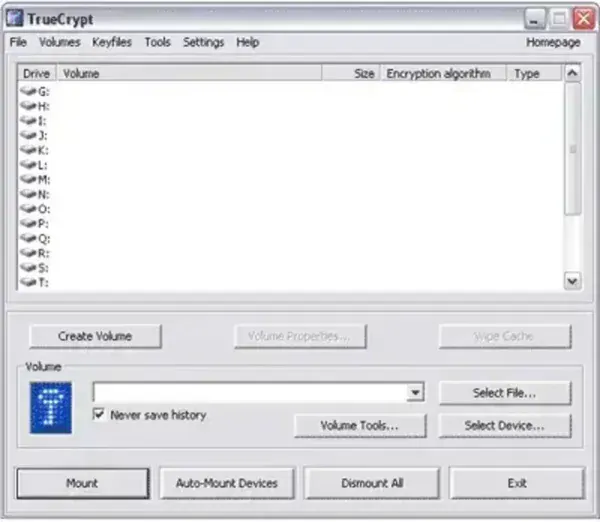
TrueCrypt originally allowed users to create encrypted virtual disks, encrypt entire partitions, and use encrypted volumes on removable drives. An encrypted container appeared as a file on the host system and could be mounted as a virtual drive after entering its password. The software supported encryption algorithms such as AES, Serpent, and Twofish, along with cascaded combinations.
Although TrueCrypt was once a popular way to protect USB storage, its development ended in 2014. The project's final release was deliberately limited to helping users access and migrate existing volumes. Its warning page explicitly says that TrueCrypt should not be considered secure because unfixed security issues may remain.
What TrueCrypt 7.2 Can and Cannot Do
- Mount existing volumes: Open supported TrueCrypt containers and encrypted partitions created with earlier versions.
- Decrypt existing data: Copy files out of a mounted legacy volume to another location.
- Legacy volume support: Work with older TrueCrypt volume formats for migration purposes.
- No new encryption: Version 7.2 cannot create new encrypted containers or encrypt partitions and devices.
- No security maintenance: The project is discontinued and does not receive current vulnerability fixes.
Do not confuse the historical features of TrueCrypt 7.1a with the capabilities of the final 7.2 release. Older versions could create encrypted volumes, but they are also discontinued and should not be used to protect new files. The final release was intended to help users transition away from TrueCrypt.
Why TrueCrypt Is Not Recommended for New Data
TrueCrypt is no longer maintained, and the project warns that it may contain unfixed security issues. Even if an old volume can still be mounted, that does not make the software suitable for creating new protected storage. The absence of security updates is particularly important for a program that handles encryption keys and mounts file systems.
Do not rely on TrueCrypt for current USB encryption, business data, confidential documents, or long-term storage. Use a maintained encryption product that supports your operating system and receives security updates. For Windows, consider BitLocker or Device Encryption where supported. For cross-platform encrypted containers, consider the maintained VeraCrypt project.
Migrate Existing TrueCrypt Data
If you have an existing TrueCrypt volume, the safer approach is to migrate its contents to a current encryption solution rather than continuing to use TrueCrypt for new files.
- Make a separate backup of the original encrypted container or partition before attempting a migration.
- Use the final TrueCrypt 7.2 release only to access an existing volume, and do so on a trusted computer.
- Mount the old volume and copy the files to a separate temporary location.
- Install a maintained encryption product such as VeraCrypt or use an appropriate Windows encryption feature.
- Create a new encrypted volume using the current product's recommended settings.
- Copy the files into the new encrypted storage and verify that they can be opened.
- Keep the original TrueCrypt volume and backup until you have confirmed the migration and stored recovery information securely.
Never delete the only copy of an encrypted volume until the migrated data has been verified. If you have forgotten the volume password or damaged the container, avoid repeated repair attempts on the original file and seek specialized recovery advice.
TrueCrypt Specifications
- Application: TrueCrypt
- Original developers: TrueCrypt Foundation
- Final official version: 7.2
- Final release date: May 28, 2014
- License: TrueCrypt License; the project is discontinued
- Original platforms: Windows, macOS, and Linux
- Historical algorithms: AES, Serpent, Twofish, and supported cascades
- Final version capability: Mount and decrypt existing volumes; cannot create new encrypted volumes or encrypt partitions
- Development status: Discontinued; the project warns of possible unfixed security issues
- Editor's Rating: ★☆☆☆☆ (1/5) for current use; retained for historical reference and migration information
- Official project notice: TrueCrypt discontinuation and security warning
- Legacy download: TrueCrypt 7.2 decryption-only release (historical software; do not use for new encryption)
- Modern alternative: VeraCrypt current downloads
- Windows encryption: Microsoft Device Encryption information
Frequently Asked Questions
Is TrueCrypt still safe to use?
No. The project is discontinued and its own website warns that unfixed security issues may remain. Do not use it to protect new data.
Can TrueCrypt 7.2 create encrypted containers?
No. The final official 7.2 release is decryption-only. It can mount and access existing TrueCrypt volumes, but it cannot create new encrypted containers or encrypt partitions.
Can I still open an old TrueCrypt volume?
TrueCrypt 7.2 was released to help users access existing volumes and migrate their data. Make a backup first and move the contents to a maintained encryption product as soon as possible.
What should I use instead of TrueCrypt?
VeraCrypt is a maintained cross-platform option for encrypted containers and volumes. Windows users can also use BitLocker or Device Encryption when available on their edition and hardware.
Can I use TrueCrypt for USB flash drive encryption?
Do not create new TrueCrypt volumes for USB drives. Use a maintained encryption tool and keep a separate backup of important files and recovery information.
Is the TrueCrypt 7.2 download still available?
Historical copies remain on SourceForge, but the final release is discontinued and should be used only when accessing existing legacy volumes for migration. Verify the download source and do not use it for new encryption.
Is TrueCrypt Worth Keeping?
TrueCrypt is important in the history of open-source disk encryption, and its final 7.2 release may still help someone access an old encrypted volume. It is no longer suitable for protecting new files, however, and its own project notice warns about possible unfixed vulnerabilities. Keep this page as a historical reference and migration guide, then move existing data to a maintained encryption solution such as VeraCrypt or a supported Windows encryption feature.