ShowMyPC Free Portable VNC
ShowMyPC is a remote-support product whose older Windows utility combined screen sharing with a VNC-based remote viewing workflow. Historical descriptions explain that a host could share its desktop and let another person connect using a session password, with an SSH forwarding component used to help establish the connection. The old portable listing is retained for historical reference; it should not be treated as confirmation that the original executable is still maintained or safe for current remote access.
How the Legacy ShowMyPC Workflow Worked
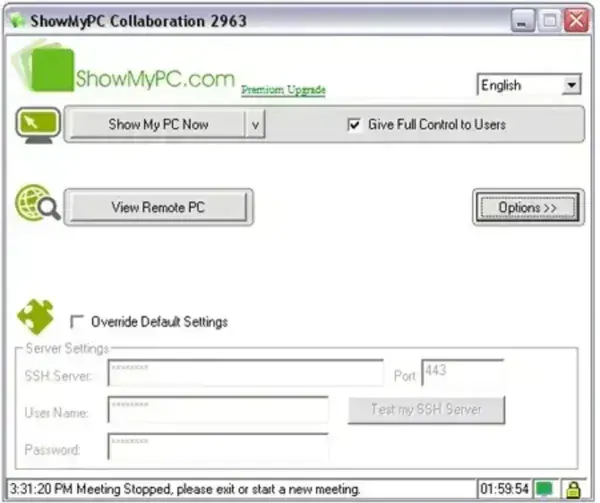
The original workflow was designed to make a desktop available to a remote viewer without requiring the host to provide its public IP address directly. The person sharing the screen started the host component and provided the session password to the intended viewer. The viewer then used the corresponding connection workflow to view or control the shared desktop, depending on the session settings and version.
This is remote access, not simply a screenshot viewer. Anyone who gains control of a remote desktop may be able to open files, launch applications, or interact with information visible on the computer. Only start a session when you understand who will connect and what permissions the session grants.
Remote Support and Desktop Sharing
Historical ShowMyPC material describes these basic uses:
- Desktop viewing: Share the host screen with a remote support person.
- Remote assistance: Allow a trusted helper to interact with the computer when the session is configured for control.
- Password-based session: Use a session password to identify the intended connection.
- SSH forwarding: The older workflow used an SSH forwarding component to establish connectivity without asking the host to disclose its IP address.
Do not assume that every current ShowMyPC service plan or download offers the same behavior as the legacy utility. Features such as file transfer, conferencing, unattended access, and cross-platform support vary by product version and service.
Security Considerations for Remote Access
Remote desktop software should be treated as a high-trust tool. A session password must be shared only with the intended helper, and the connection should be ended as soon as the support task is complete. Never accept a remote session request from an unknown person or give access to someone who contacts you unexpectedly.
The old product description does not establish the current security design, update status, or support lifecycle of the legacy executable. Do not expose an old VNC service directly to the public internet, forward ports for an unverified build, or use it to access sensitive systems. For current support work, choose a maintained remote-support tool with documented encryption, authentication, access controls, and security updates.
Legacy Status and Compatibility
The original portable listing dates from the early VNC era. ShowMyPC's current website represents the developer's present service, but it does not confirm that the historical standalone package is still available or supported. Compatibility with Windows 10 and Windows 11, the integrity of old downloads, and the security properties of the legacy client have not been verified.
If you are researching the older program, use the current project site for product information and support. Do not download repackaged copies from unknown third-party sites.
ShowMyPC Specifications
- Product: ShowMyPC (legacy desktop-sharing utility)
- Developer: ShowMyPC
- Historical technology: VNC-based screen sharing with an SSH forwarding component
- License: The legacy listing described a free option; current service terms may differ
- Platform: Historical Windows utility; current compatibility unverified
- Project website: ShowMyPC
- Legacy download: No verified current download source for the old portable client
- Editor's Rating: ★★★☆☆ (3/5)
Frequently Asked Questions
Did the old ShowMyPC utility use VNC?
Historical descriptions identify it as a VNC-based remote desktop sharing tool, with an SSH forwarding component used to establish connections.
Did the person sharing a screen need to provide an IP address?
The older workflow was designed to use a session password and forwarding service so the host did not need to hand out its public IP address directly. That does not mean the connection was anonymous or automatically secure.
Can the remote viewer control the computer?
The legacy product was described as supporting remote assistance as well as screen sharing. The exact permissions depended on the version and session settings. Treat any remote-control session as full access to the visible desktop.
Is the old ShowMyPC portable client compatible with Windows 11?
Current compatibility has not been verified. The old listing does not establish support for modern Windows releases.
Is ShowMyPC still free?
The older listing described a free option, but the current service may have different plans and terms. Check the developer's website for current product and licensing information.
Is the Legacy ShowMyPC Utility Still Worth Using?
The old ShowMyPC workflow is an example of how portable VNC-based desktop support was delivered through a session password and forwarding component. Remote support remains useful, but an unverified legacy executable is not a suitable choice for accessing current systems. Use a maintained service with clearly documented security controls, and keep this entry as a historical reference to the earlier ShowMyPC utility.